
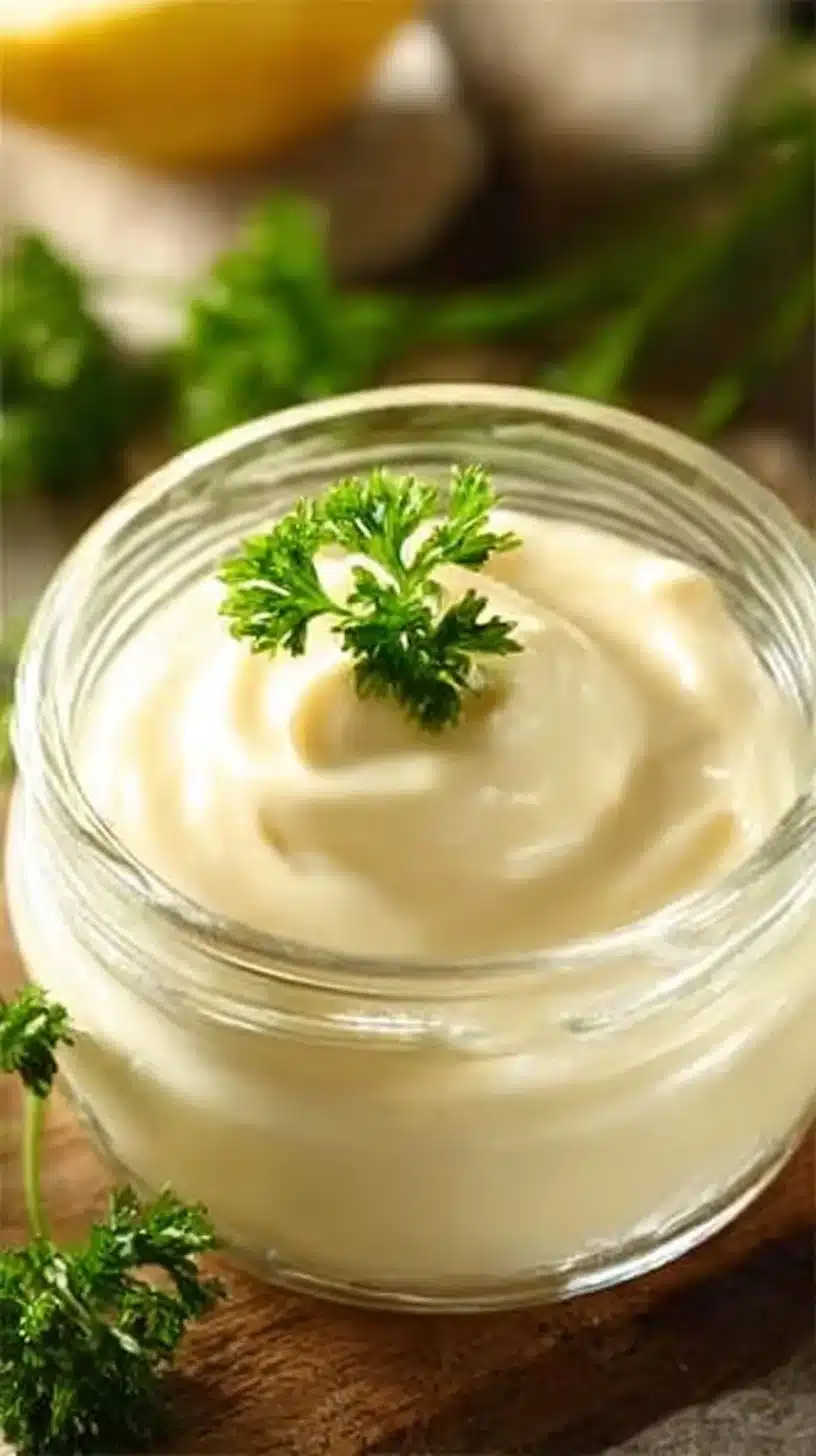
The afternoon my neighbor dropped off a basket of ripe lemons, I found myself making a bowl of homemade mayonnaise for the first time in years. The kitchen filled with a bright, citrusy steam and the slow whirl of an immersion blender turned egg, oil, and lemon into a glossy, pale sauce that tasted like sunshine. That exact, comforting moment is why I love this 4-Ingredient Homemade Mayonnaise Recipe (For Beginners!) — it’s fast enough for a weeknight but small-batch enough to feel deliberate.
If you’re new to emulsions, the 4-Ingredient Homemade Mayonnaise Recipe (For Beginners!) is the best place to start. You’ll notice a clean tang from the lemon, a gentle savory salt backbone, and the smooth, rich body that comes from slowly coaxing oil into egg. Make it when you want a brighter sandwich spread, a quick aioli for fries, or a starter for dressings and dips. If you’ve ever made homemade ramen or want to pair this mayo with bold homemade flavors, check out this homemade ramen noodles recipe for inspiration.
why you’ll love this recipe
- Minimal ingredients: just egg, salt, lemon, oil, and a tiny garlic touch if you like it — no stabilizers, no emulsifiers.
- Fast results: with an immersion blender you’ll have mayonnaise in about a minute; whisk it and you’ll get a rewarding workout and a thicker texture.
- Clean, adaptable flavor: lemon brightens without overwhelming, and the oil choice lets you tailor the richness.
- Beginner-friendly technique: clear steps and simple fixes when an emulsion wobbles.
- Homemade freshness: the aroma and texture outperform store-bought mayo every time.
at a glance
- Yield: about 3/4 to 1 cup (roughly 220–240 ml)
- Prep time: 5–10 minutes (hands-on)
- Cook time: 0 minutes (no heat required)
- Total time: 5–10 minutes
- Difficulty: Easy — beginner level with basic kitchen tools
- Key tools: immersion blender and 600 ml jar (or whisk and 2-quart mixing bowl), measuring spoons, citrus juicer
how to make 4-Ingredient Homemade Mayonnaise Recipe (For Beginners!) — overview
- First, bring the egg and lemon juice to room temperature so the ingredients emulsify smoothly. Technique note: a room-temperature egg at about 68°F (20°C) emulsifies faster than a chilled egg.
- Next, combine egg, salt, and lemon in a narrow jar or bowl and begin blending or whisking while slowly adding the oil. Technique note: add oil in a very thin stream for a stable emulsion.
- Then, keep blending until the mixture thickens to a glossy, ribbon-like consistency. Technique note: pause to scrape the sides and check texture after 30–60 seconds with a blender or 3–5 minutes by hand.
- Finally, taste and adjust salt or lemon, stir in 2 drops of freshly squeezed garlic juice if you want a mild garlic note, and refrigerate. Technique note: rest the mayo 10 minutes to let flavors meld.
ingredients
1 large – egg
1 tsp. – salt
1 tbsp. – freshly squeezed lemon juice
1 cup – avocado or olive oil
2 drops of freshly squeezed garlic juice ((optional, but my preference))
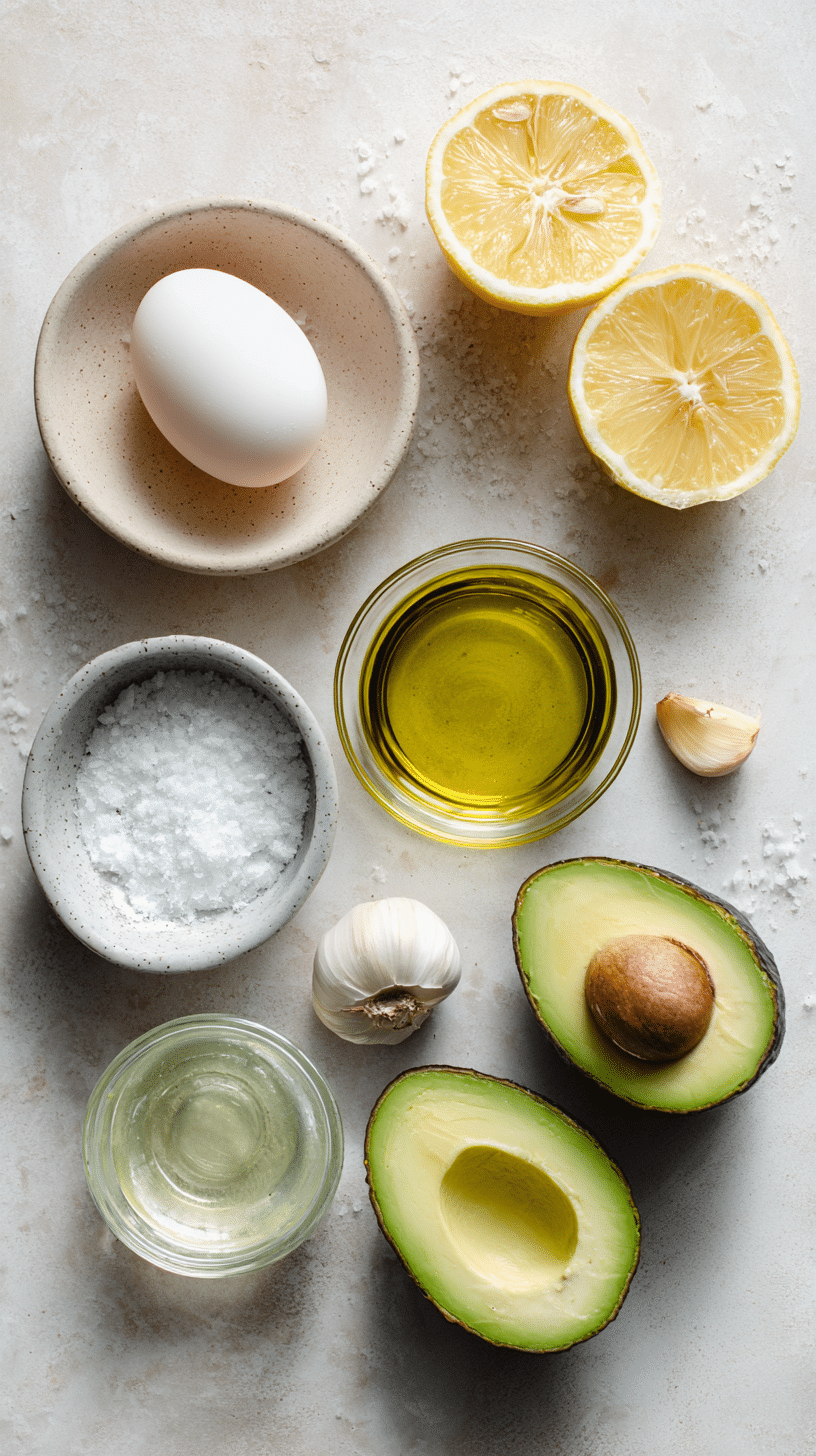
The egg provides the lecithin and proteins that form the emulsion — it’s the glue that holds oil and water together. Salt balances flavor and slightly helps protein extraction for stability. Lemon juice provides acid; it brightens and stabilizes the emulsion and can be swapped for white wine vinegar at the same amount for a slightly different tang. The oil contributes body and flavor: avocado oil yields a neutral, smooth mayo; light-tasting olive oil works as well and preserves a pale color; extra-virgin olive oil will make a greener, sharper mayonnaise with a bolder flavor. Garlic juice adds aromatic complexity without the textural bite of minced garlic.
Substitutions and how they affect the result:
- Egg: use pasteurized eggs if you’re concerned about raw eggs; texture and emulsification are the same.
- Lemon juice: replace with 1 tbsp white wine vinegar for a less citrusy, slightly sharper lift.
- Oil: sunflower or light grapeseed oil will create an ultra-neutral mayo; extra-virgin olive oil will taste peppery and can thin the final color. If you substitute more intensely flavored oils, start with a 50/50 mix with a neutral oil to avoid overpowering the mayo.
- Garlic: swap the two drops of garlic juice for 1/8 tsp Dijon mustard for extra stability and a gentle tang — mustard adds emulsifying compounds, making the mayo slightly thicker.
Also, if you want to read something sweet after making mayo, try this classic homemade orange candy recipe for a bright pairing idea — it’s a fun contrast.
directions
How to Make Mayonnaise
- Prep the ingredients: Let the egg sit on the counter for 20–30 minutes so it reaches room temperature (about 68°F / 20°C). Measure the oil and lemon juice; keep the oil at room temperature as well.
- Combine base ingredients: Crack the egg into a 600 ml narrow jar (or a 2-quart mixing bowl if whisking). Add 1 tsp. salt and 1 tbsp. freshly squeezed lemon juice. If using garlic juice, add the two drops here. Visual cue: the mixture will look thin and slightly frothy at this point.
- Start the emulsion (immersion blender method): Place the immersion blender head at the bottom of the jar so it rests on the egg mixture. Turn the blender on low for 3–5 seconds until the base emulsifies and you see it thicken slightly.
- Add oil slowly: With the blender running, slowly pour the oil in a thin, steady stream. Aim for about a teaspoon at a time for the first 30 seconds, then you can increase to a slow drizzle. Timing cue: the full cup of oil should take about 45–60 seconds to integrate with a continuous low-to-medium stream. Visual cue: the mayo will lift off the sides of the jar and form a thick, glossy ribbon when you lift the blender.
- Finish and adjust: Once thick, stop the blender and taste. Add more lemon or salt in 1/4 tsp increments if needed. If the mayo feels too stiff, thin it by stirring in 1–2 teaspoons of water or lemon juice until you reach the desired spreadable texture.
- Hand-whisk alternative: If whisking, combine the egg, salt, and lemon in a 2-quart bowl. Begin whisking vigorously while adding a few drops of oil at a time for the first minute, then a slow thin stream. Expect 4–7 minutes of steady whisking. Visual cue: the mayo becomes glossy and forms soft peaks.
- Serve or store: Transfer to an airtight jar and chill for at least 10 minutes so flavors settle. The mayo will firm slightly in the fridge.
Timing and temperature notes: starting with room-temperature ingredients shortens emulsification time. If your kitchen is cool (below 60°F / 15°C), the emulsion may take longer or require slightly warmer egg/oil. If the mixture breaks (separates), see the tips section for quick fixes.
test-kitchen notes
- Cold egg vs. room-temperature egg: I made two batches using the same immersion blender and a 600 ml jar. The room-temperature egg (68°F) emulsified in 45 seconds and produced a silkier texture. The cold egg (about 40°F straight from the fridge) took nearly 2 minutes and produced a slightly grainier finish. Recommendation: let the egg warm to room temperature for fastest, smoothest results.
- Immersion blender vs. hand whisk: I whisked one batch in a 2-quart bowl for 6 minutes and blended another batch with an immersion blender in 60 seconds. The whisked mayo was thicker and held stiffer peaks; the blended mayo was glossier and smoother. For sandwiches, I preferred the whisked version; for dips and dressings, the immersion blender’s silkier texture won. My recommendation: use an immersion blender for speed and consistency; whisk if you want extra body.
- Oil choice: I tested avocado oil, light olive oil, and extra-virgin olive oil. Avocado oil yielded a neutral, creamy mayo with a pale color. Light olive oil had mild flavor and fast emulsification. Extra-virgin olive oil produced a greenish hue and a noticeably peppery, assertive taste that overpowered delicate applications. Recommendation: use avocado or light olive oil for a classic result; reserve extra-virgin olive oil for bold, Mediterranean-style spreads.
tips for perfect 4-Ingredient Homemade Mayonnaise Recipe (For Beginners!)
- Use room-temperature ingredients: a 68°F egg and oil emulsify more reliably than chilled ones. If you forget to plan, set the egg in a bowl of warm tap water for 5–8 minutes.
- Go slow with the oil: the emulsion forms in the first few teaspoons of oil. If you pour too fast, the mixture may split. With a blender, keep the head at the bottom for the first 15–20 seconds to build the emulsion base.
- Fix a broken mayo: start with a clean jar containing 1 tsp hot water or 1 egg yolk, then slowly whisk in the broken mayo. This usually re-establishes the emulsion.
- Measure precisely the first few times: too much acid or salt can unbalance the emulsion. Later, adjust to taste.
- Keep an eye on color and sheen: a successful mayo looks glossy and slightly domed on a spoon. Avoid over-processing; too much blending can make it overly thin.
- Use a narrow vessel for hand blending or an immersion blender; the confined space helps ingredients combine quickly. I used a 600 ml jar and found it stabilized the stream and reduced splatter.
variations
- Garlic aioli: Add 1 clove crushed garlic or 2 drops extra garlic juice and 1/4 tsp Dijon mustard. Result: a stronger aromatic mayo; no technique changes needed.
- Lemon-herb mayo: Stir in 1 tbsp minced fresh herbs (parsley, chives, dill). Result: bright, herbal notes and slightly chunkier texture — fold herbs in at the end.
- Spicy chipotle mayo: Add 1–2 tsp chipotle in adobo, blended into the mayo. Result: smoky heat and a deeper color; start with 1 tsp and increase to taste.
- Vegan alternative: Replace the egg with 3 tbsp aquafaba (chickpea brine) and follow the same technique. Result: lighter texture and slightly less richness; the emulsion will be stable but a touch more airy.
- Low-fat mayo: Use 1/2 cup oil and 1/2 cup Greek yogurt (or blended silken tofu) in place of all oil. Result: tangier, thinner spread; whisking time increases and refrigerate immediately.
how to serve 4-Ingredient Homemade Mayonnaise Recipe (For Beginners!)
Serve this mayo as a sandwich spread, a dip for fries and crudités, or a base for creamy dressings. Spoon it into a small ramekin and garnish with a pinch of smoked paprika and a lemon wedge for a simple appetizer. For an elegant brunch, dollop on roasted asparagus or serve alongside grilled shrimp. The neutral, creamy base makes it a great partner for smoky proteins, bright salads, and crunchy vegetables.
Plating ideas: create a quenelle with two spoons and place beside seared scallops, or thin the mayo with 1–2 tbsp water and lemon to make a pourable dressing for slaws.
how to store 4-Ingredient Homemade Mayonnaise Recipe (For Beginners!)
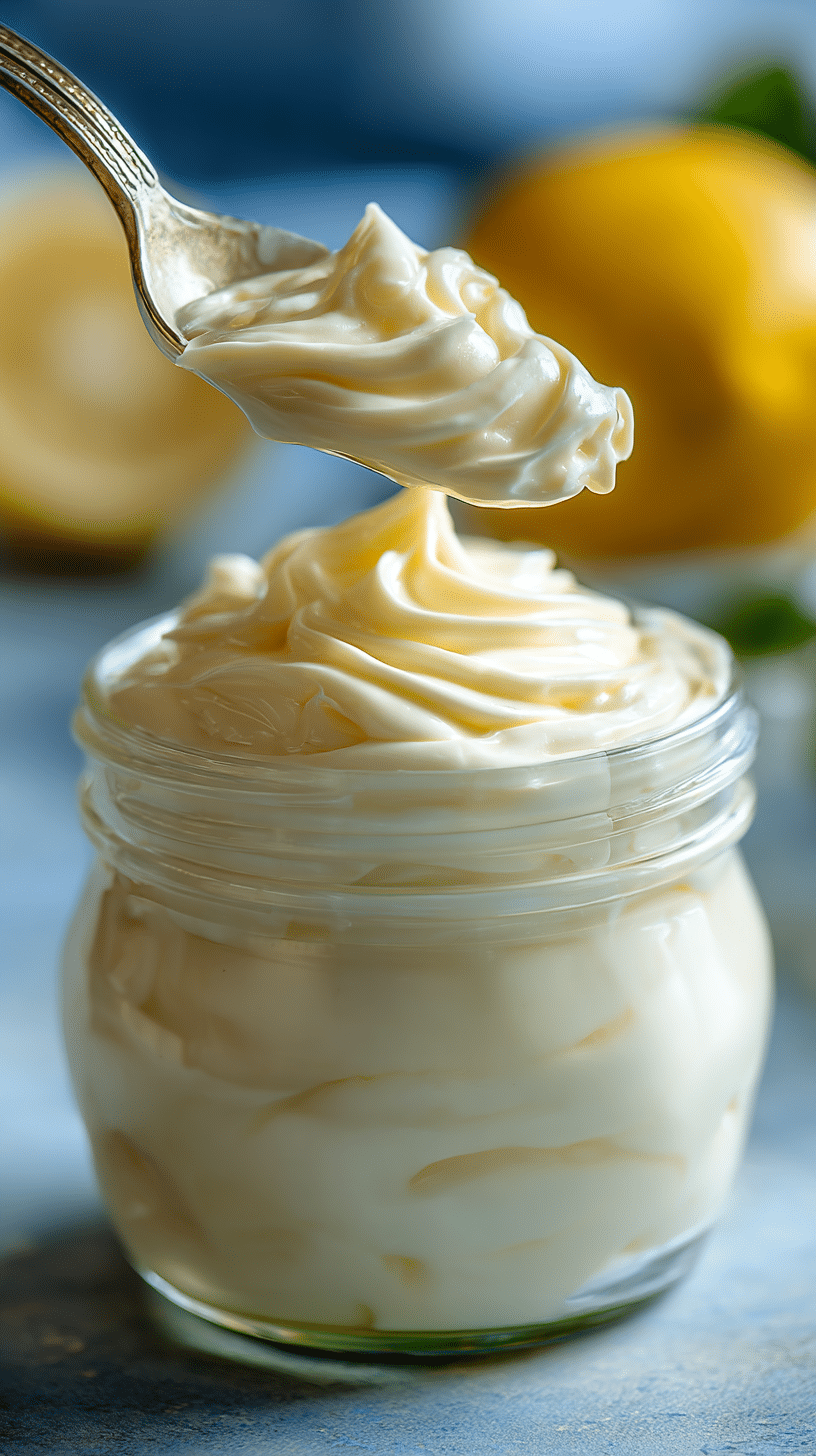
Refrigerate in an airtight container at 40°F (4°C) or below. Use within 3–4 days because this recipe uses a raw egg; the shorter window minimizes food-safety risk and keeps flavor bright. Freezing is not recommended — the emulsion will break and the texture will become watery upon thawing. There’s no reheating: mayo serves cold or at room temperature only. If separation occurs after storage, whisk in 1 tsp warm water to re-emulsify.
Conclusion
I hope this guide gives you the confidence to try the 4-Ingredient Homemade Mayonnaise Recipe (For Beginners!) tonight — it’s quick, forgiving, and something you’ll reach for whenever a sandwich or a simple salad needs lifting. If you want a couple of comparison reads or inspiration for similar simple homemade sauces, see this helpful post about Cooking Basics: 4-ingredient homemade mayonnaise – Healthy … and this classic take: 4-Ingredient Homemade Mayonnaise Recipe (For Beginners!). Try it, tweak one variable at a time, and share a jar with a friend who’ll appreciate the fresh difference.
FAQs
Q: Is it safe to eat homemade mayonnaise made with raw egg?
A: Fresh, high-quality eggs reduce risk, and many home cooks use pasteurized eggs for extra safety. Keep the mayo refrigerated and consume within 3–4 days to minimize risk.
Q: My mayo is too thin — how do I thicken it?
A: Whisk in a few drops of oil slowly while whisking vigorously, or add 1/4 tsp Dijon mustard to help thicken and stabilize. Chilling for 10–30 minutes also firms it up.
Q: Can I make this mayo without a blender?
A: Yes. Use a whisk in a 2-quart bowl and add oil drop by drop for the first minute, then a slow stream. Expect 4–7 minutes of steady whisking.
Q: What causes mayonnaise to break, and how do I fix it?
A: Pouring oil too quickly or using cold ingredients commonly breaks an emulsion. Fix it by starting with 1 tsp hot water or a fresh egg yolk in a clean bowl, then gradually whisk the broken mayo into it.
Q: Can I use any oil for this recipe?
A: Use neutral oils like avocado, sunflower, or light olive oil for a classic taste. Extra-virgin olive oil produces a stronger, often greener mayo and can be overpowering for delicate dishes.
Q: How can I make the mayo tangier?
A: Increase lemon juice in 1/4 tsp increments or add a splash of white wine vinegar. Taste as you go to avoid over-acidifying the mayo.
Print
4-Ingredient Homemade Mayonnaise Recipe (For Beginners!)
- Total Time: 10 minutes
- Yield: 3/4 to 1 cup (roughly 220–240 ml) 1x
- Diet: Vegetarian
Description
A quick and easy homemade mayonnaise that brightens your sandwiches and dips with fresh lemon flavor.
Ingredients
- 1 large egg
- 1 tsp salt
- 1 tbsp freshly squeezed lemon juice
- 1 cup avocado or olive oil
- 2 drops of freshly squeezed garlic juice (optional)
Instructions
- Let the egg and lemon juice reach room temperature.
- Combine egg, salt, and lemon juice in a narrow jar or bowl.
- Start blending or whisking while slowly adding the oil in a very thin stream.
- Continue blending until the mixture thickens to a glossy consistency.
- Taste and adjust salt or lemon, adding garlic juice if desired, and refrigerate for 10 minutes before serving.
Notes
For best results, use room temperature ingredients and add oil slowly to ensure proper emulsification. Can be refrigerated for 3-4 days.
- Prep Time: 10 minutes
- Cook Time: 0 minutes
- Category: Condiment
- Method: Blending
- Cuisine: American
Nutrition
- Serving Size: 1 tablespoon
- Calories: 90
- Sugar: 0g
- Sodium: 100mg
- Fat: 10g
- Saturated Fat: 1g
- Unsaturated Fat: 8g
- Trans Fat: 0g
- Carbohydrates: 0g
- Fiber: 0g
- Protein: 1g
- Cholesterol: 60mg