
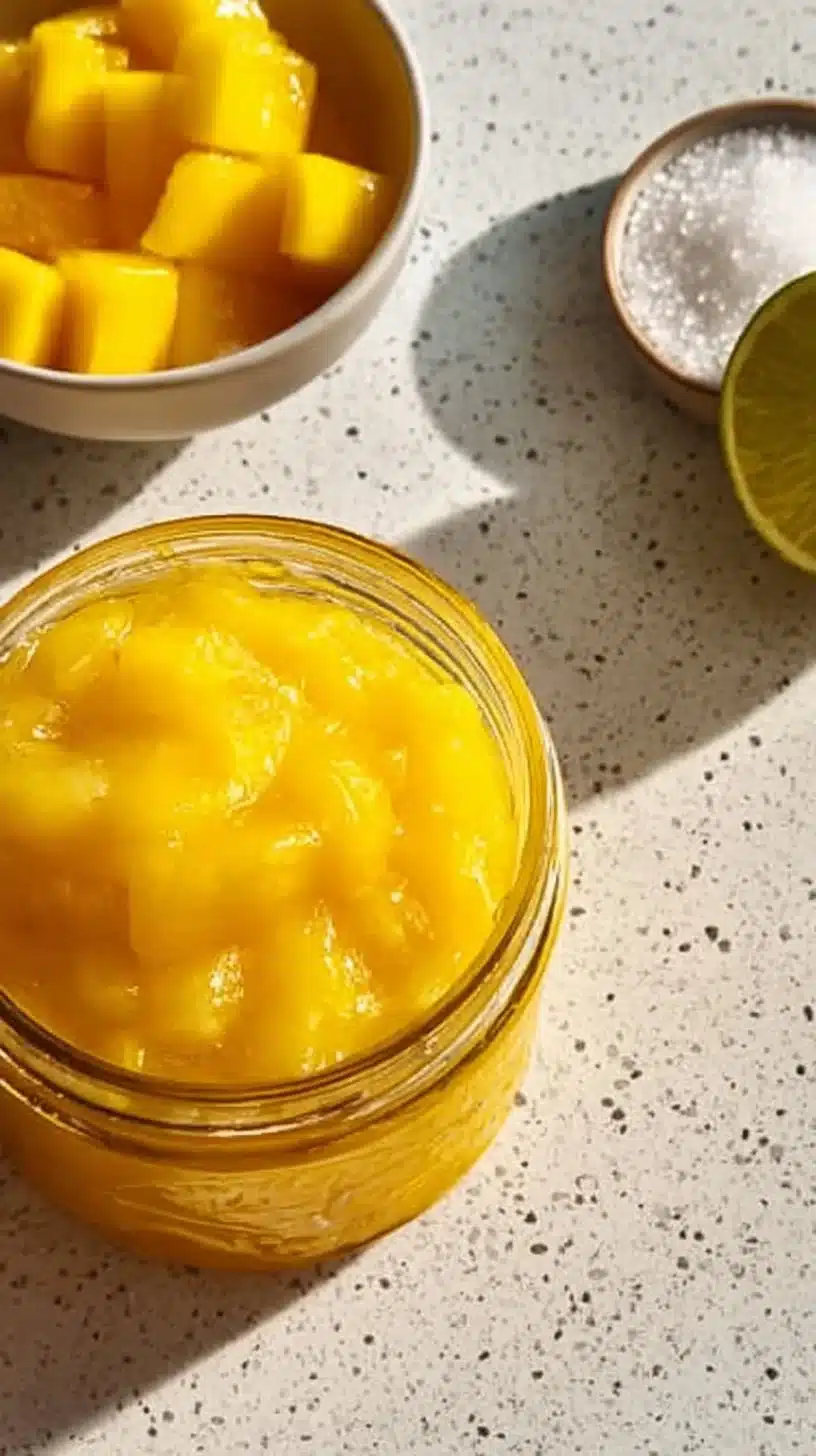
I sliced a mango at the kitchen table one slow Sunday morning, the light coming in at that particular angle that makes everything look a little softer. The fruit smelled faintly of summer — a sweet perfume that mixed with the warm bread I had just pulled from the oven. I wasn’t planning to make anything fancy; I wanted something simple to spoon over yogurt and leftover pancakes. A quick simmer, a squeeze of citrus, a little patience at the end while it cooled — and I had a pot of mango compote that tasted like the entire morning. It’s the kind of thing I make when I want a small, easy treat that feels thoughtfully homemade. If you like mango in other forms, you might also enjoy this mango sago as a companion dessert.
Why this recipe works
This compote is straightforward because it leans on a few reliable ideas: ripe mangoes for concentrated flavor, a touch of sugar to pull out the juices and help with a glossy finish, and citrus to lift the sweetness so nothing tastes flat. I keep the cooking time short — long enough to soften the fruit and release its juices, but not so long that you lose the mango’s fresh aroma. The result is a balance between intact fruit pieces and syrupy liquid, which makes it versatile: it’s spoonable but still has body.
If you want a drink to pair with it, the bright notes in this compote play nicely with something floral or tart, like a chilled hibiscus drink — try this mango-hibiscus iced tea for a summer spread.
Ingredients & Instructions
Ingredients
- 4 ripe mangoes (about 3 to 3 1/2 pounds total), peeled and cut into roughly 1/2–3/4-inch pieces
- 1/3 cup granulated sugar (adjust to taste; 1/4–1/2 cup is fine)
- 2 tablespoons fresh lime or lemon juice
- 2 tablespoons water (or mango juice if you have extra)
- Pinch of fine salt
- 1/2 teaspoon vanilla extract or 1/8 teaspoon ground cardamom (optional)
Instructions Begin by preparing the mangoes: peel them, slice away the flesh from the pits, and cut into chunks about the size of a thumbnail. The pieces should be consistent so they cook evenly and feel pleasant on the spoon.
Put the mango pieces into a medium saucepan with the sugar, water, and a pinch of salt. Turn the burner to medium-low. You’re not trying to rush this — you want the sugar to dissolve and the fruit to soften without breaking down into a completely smooth puree. As the mixture warms, you’ll see juices come out and the sugar will start to make a glossy syrup that gathers at the bottom.
After about 6–8 minutes (depending on how ripe your mangoes are), stir gently. You want some pieces to stay whole while others begin to collapse and thicken the liquid. If it looks too dry, add another tablespoon or two of water. Finish with the citrus juice to brighten the flavor and, if using, the vanilla or cardamom for a subtle background note. Let it simmer a minute more, then remove from heat and let it cool in the pan for 10–15 minutes — the compote will continue to thicken as it cools.
This recipe yields a compote with a mix of soft mango chunks and syrupy sauce. Taste and adjust: add a little more sugar if the fruit isn’t sweet enough, or a splash more citrus if it needs lift. Transfer to a jar or bowl and refrigerate once it reaches room temperature.
How the recipe comes together
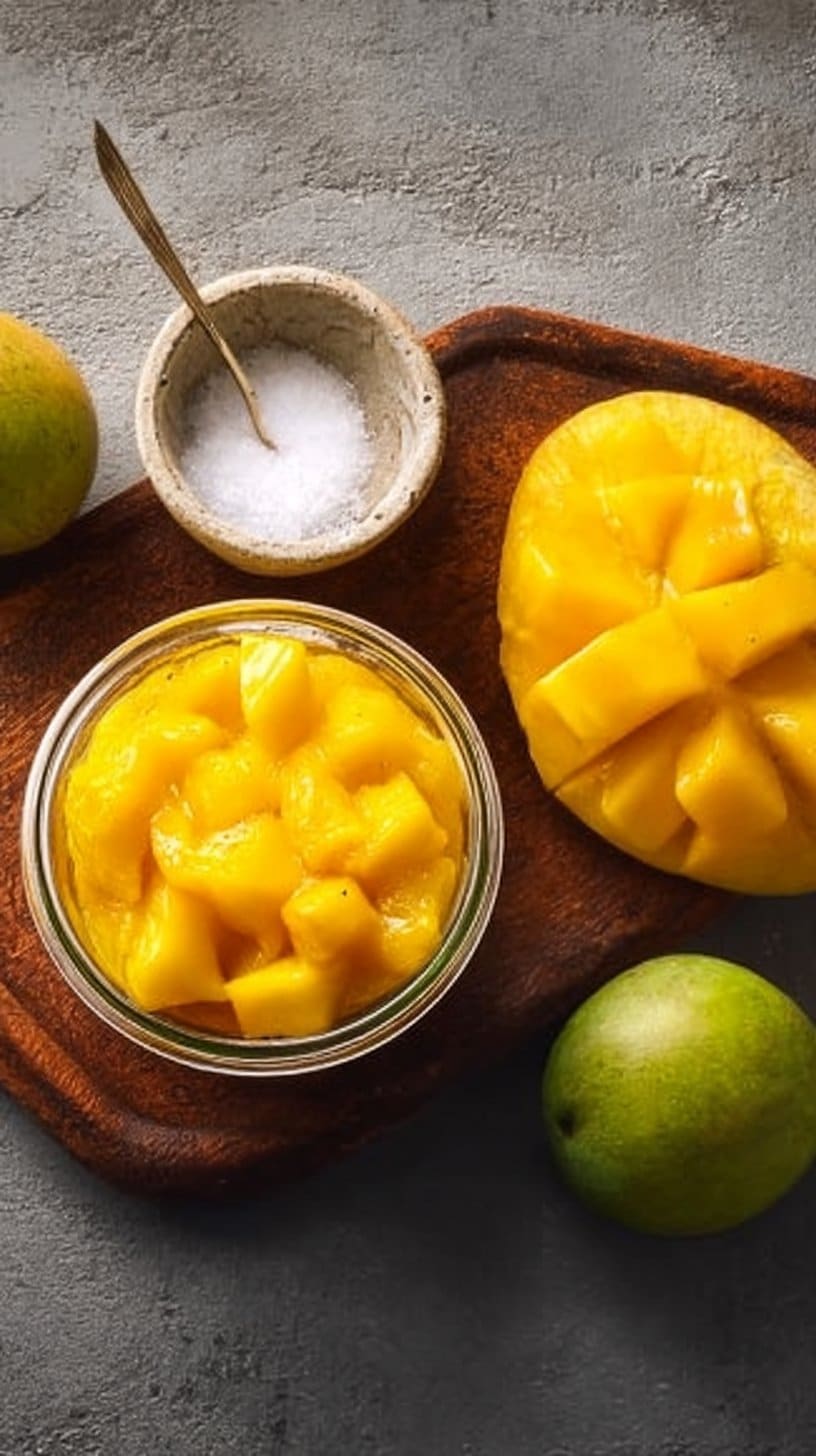
I like to think of the process as three simple stages: soften, concentrate, and finish. Softening is just bringing the fruit gently up in temperature so the flesh loosens and releases juice. Concentrating happens as the sugar and heat coax those juices into a thicker, glossy syrup that clings to the fruit. Finishing is the small things — a squeeze of lime, the right pinch of salt — that keep the compote tasting like fresh mango rather than overly sweet jam.
Visually, you’ll know you’re done when many of the mango pieces are tender but still hold their shape, and the syrup coats a spoon rather than running off it like water. The compote will be somewhat loose while hot; chilling firms it up a touch. I rarely cook the mixture until everything falls apart because I like the contrast in textures.
Practical tips from experience
- Choose ripe mangoes: They should give slightly to the touch and smell fragrant at the stem. Overripe mangoes will make the compote too soft and watery; under-ripe ones will be bland and starchy.
- Adjust sweetness after cooking: Mango sweetness varies. I start with 1/3 cup sugar and taste after cooking, adding more if needed.
- Don’t over-stir: Gentle folding is enough. Over-stirring breaks the pieces down faster and turns the compote mushy.
- Use a wide pan: A wider surface area helps the liquid evaporate just enough to thicken.
- Small-batch rules: This keeps well. If you double the recipe, cook in two pans or a much larger pan so the fruit can cook evenly.
- Add-ins: If you like warmth, a pinch of cardamom or a split vanilla bean can be lovely. I usually add these near the end so the fresh mango character still shines.
Serving ideas
Compote is one of those things that makes everyday dishes feel slightly more special. Spoon it over plain or Greek yogurt for breakfast, spread it between cake layers as a lightly spiced fruit filling, or warm it a little and serve over vanilla ice cream. It’s also excellent folded into cream cheese or ricotta for a quick tart topping, or mixed into porridge.
If you want a dessert lineup, pair this compote with something texturally different like a sago pudding — this mango sago is a cozy match and echoes the mango flavor in a more set, pearl-textured way. For a lighter route, use it as the fruit component in a simple tart with a crumbly shortbread base.
Storage and make-ahead advice
Let the compote cool completely before sealing it in a jar. Stored in the refrigerator, it will keep 5–7 days. You can also freeze compote in an airtight container for up to 3 months; thaw overnight in the fridge before using. If you plan to use it as a filling, bring it to room temperature or warm it gently so it spreads more easily.
Make-ahead tip: Compote often tastes better the next day after the flavors meld. If you’re assembling a dessert for guests, make it a day ahead and chill; if it’s too firm, warm gently and stir to loosen.
Variations
- Spiced: Add a cardamom pod or a cinnamon stick while simmering, remove before serving.
- Boozy: Stir in a tablespoon of rum or mango liqueur off the heat for an adult twist.
- Citrus-forward: Use orange juice instead of lemon/lime and add a teaspoon of finely grated orange zest.
- Less sugar: Reduce sugar by a few tablespoons and add a splash more citrus to compensate if your mangoes are very sweet.
FAQs
Q: Can I use frozen mango? A: Yes. Defrost and drain any excess liquid, then proceed. You may need slightly less water and a shorter cook time since frozen mango breaks down faster.
Q: How do I know when the compote is done? A: The mango pieces should be tender but not completely dissolved, and the liquid should look glossy and slightly thickened. It will thicken more as it cools.
Q: Can I make this sugar-free? A: You can reduce or omit sugar, especially with very ripe mangoes. The texture will be looser; add a little pectin if you want a thicker set without sugar.
Q: Is this suitable as a cake filling? A: Yes—strain off excess syrup or cook a bit longer to reduce the liquid before using between cake layers so it doesn’t make them soggy.
Conclusion
If you’d like ideas from other cooks or a slightly different technique for using mango compote as a filling, check this helpful version from Veggie Desserts or see how another baker uses compote specifically for cakes at Pink Haired Pastry Chef. Both are practical reads if you want an alternate take for different uses.
Simple and forgiving, this compote is one of those recipes I return to when I want a homemade touch with little fuss. It’s reliable, keeps well, and happily dresses up breakfast, snacks, or a quick dessert — the kind of thing I’d pass along to a friend when I want to share something easy and true.
Print
Mango Compote
- Total Time: 20 minutes
- Yield: 2 cups 1x
- Diet: Vegetarian
Description
This mango compote is a simple, spoonable fruit topping made with ripe mangoes, citrus, and a touch of sugar. It cooks quickly into a glossy, softly chunky sauce that’s perfect for yogurt, pancakes, desserts, or cake fillings.
Ingredients
4 ripe mangoes, peeled and cut into chunks
1/3 cup granulated sugar
2 tbsp fresh lime or lemon juice
2 tbsp water or mango juice
Pinch of fine salt
1/2 tsp vanilla extract or 1/8 tsp ground cardamom (optional)
Instructions
1. Peel the mangoes, remove the pits, and cut the flesh into evenly sized chunks.
2. Add mango pieces, sugar, water, and salt to a medium saucepan over medium-low heat.
3. Cook gently for 6 to 8 minutes, stirring occasionally, until the mango softens and releases its juices.
4. Stir gently so some mango pieces stay intact while others break down slightly.
5. Add citrus juice and vanilla or cardamom if using, then simmer 1 minute more.
6. Remove from heat and let cool for 10 to 15 minutes; the compote will thicken as it cools.
7. Taste and adjust sweetness or acidity if needed before serving or storing.
Notes
Avoid overcooking to keep some mango pieces intact. The compote thickens more after cooling and can be loosened with a splash of juice or water if needed.
- Prep Time: 10 minutes
- Cook Time: 10 minutes
- Category: Dessert
- Method: Cooking
- Cuisine: International
Nutrition
- Serving Size: 1/4 cup
- Calories: 90
- Sugar: 25g
- Sodium: 5mg
- Fat: 0g
- Saturated Fat: 0g
- Unsaturated Fat: 0g
- Trans Fat: 0g
- Carbohydrates: 30g
- Fiber: 2g
- Protein: 1g
- Cholesterol: 0mg