
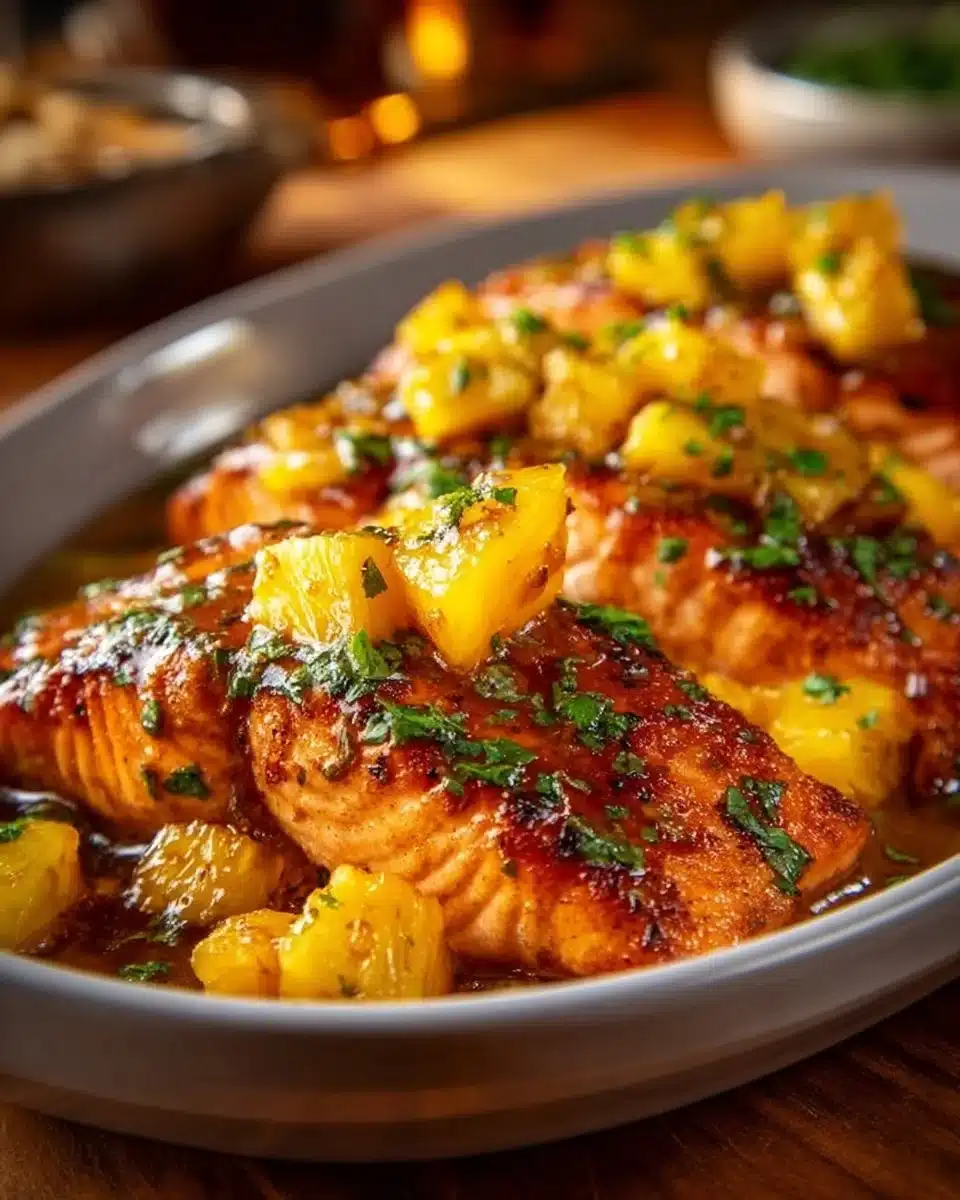
Pineapple Glazed Salmon solves the dinner problem when you need a quick, consistent, and flavorful main with minimal fuss. It works for busy cooks, small families, and anyone who wants a reliable weeknight protein that scales to leftovers. The method keeps hands-on time low and gives predictable texture and glaze coverage. Use straightforward pantry ingredients and a short bake-plus-brief-broil finish to control moisture and caramelization. Pineapple Glazed Salmon fits meal planning because it reheats well and holds up in a sauce or salad for 2–3 days.
This recipe pairs a sweet-tangy glaze with simple roast timing to deliver moist salmon and a glossy finish. The flavor leans sweet from brown sugar and pineapple, balanced by soy and rice vinegar for depth. The structure is: dry and oil the fish, apply most of the glaze, bake until just done, then quick broil for color if needed. The process is fast and repeatable. For other quick glazed options that keep the same weeknight logic, see this coconut-crusted salmon with pineapple salsa recipe.
Why this recipe works
The combination of brown sugar and soy sauce creates a sticky glaze that browns without burning when timed correctly. Pineapple adds acidity to cut the sweet and a little enzymatic tenderizing without overdoing it if the fruit is well drained. Baking at a consistent 400°F hits the sweet spot: fast enough to keep salmon moist, hot enough to set the glaze. A short rest after baking lets juices redistribute so each fillet stays tender. These controls keep results consistent across different ovens and salmon thicknesses.
Cooking logic overview
Start with dry, oiled fillets so seasoning and glaze stick evenly. Applying most of the glaze before baking gives flavor inside and out; reserving a bit lets you top later for shine and to avoid burning. The chosen oven temperature cooks through in a short window so you can watch doneness without long timing guesses. A final brief broil is optional for browning; it’s only for color and should be under strict watch. These steps reduce variables so you get the same texture and glaze finish every time. For an alternate baked approach, check this baked boursin salmon for technique ideas.
Ingredients
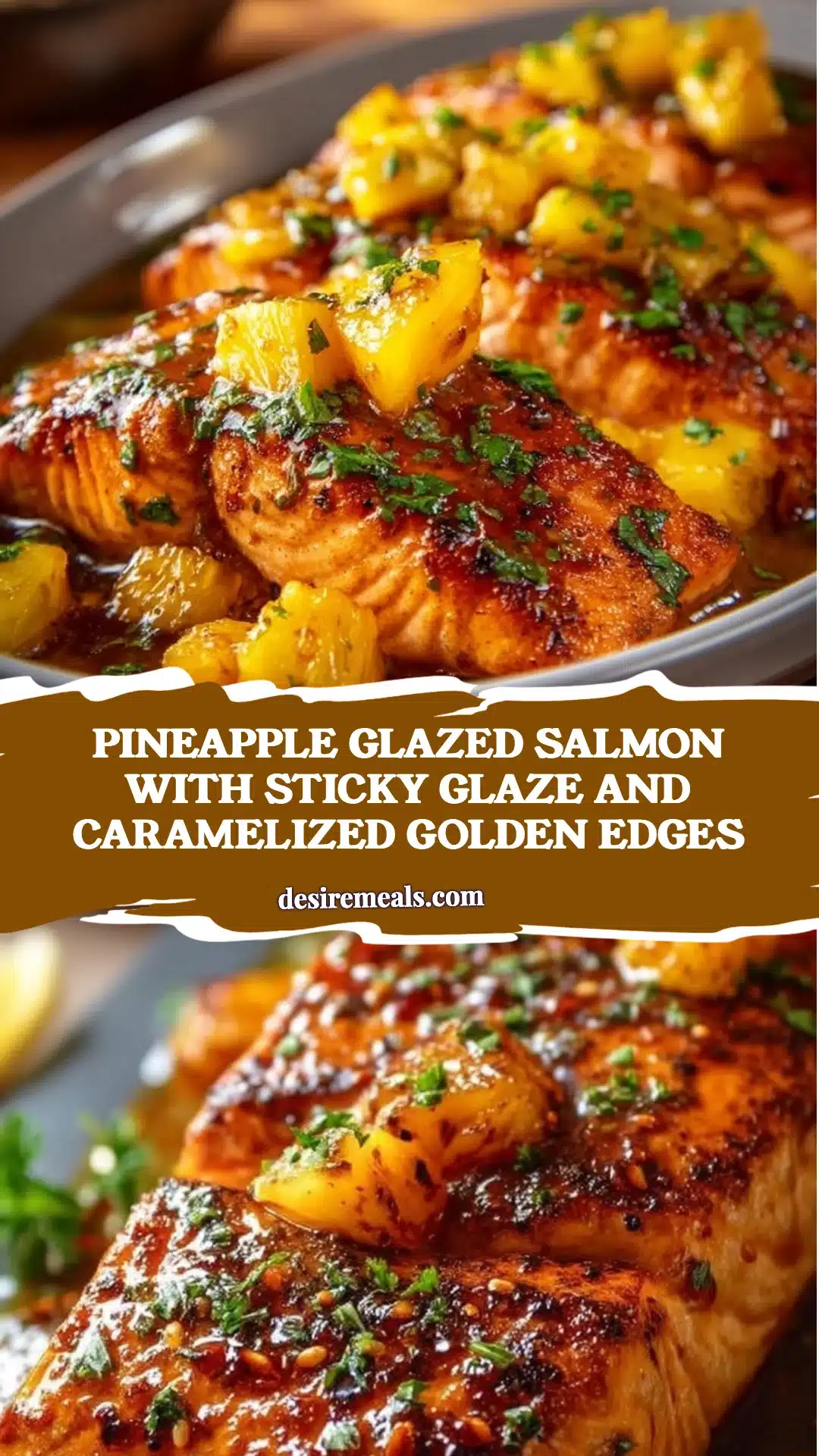
4 salmon fillets, approximately 6 ounces each — firm portion control for even cooking. 1 tablespoon olive oil — helps seasoning and prevents sticking. 1/2 teaspoon salt — basic seasoning to bring flavor forward. 1/4 teaspoon black pepper — light bite. 1 cup fresh or canned pineapple, diced and well drained — sweetness, acidity, and texture; drain to avoid extra liquid. 1/4 cup packed light brown sugar — caramelizes the glaze. 2 tablespoons soy sauce — umami and salt balance. 1 tablespoon rice vinegar — acidity to cut sweetness. 1 teaspoon minced garlic — aromatic depth. 1/2 teaspoon grated fresh ginger (optional) — bright spice note. 1 tablespoon fresh parsley, chopped (for garnish) — fresh finish. Each ingredient pulls a clear role: balance, browning, or texture. Small substitutions that keep the balance work — for example, honey for brown sugar or tamari for soy — but stick to quantities to keep consistent results. For a complementary sweet-spicy idea, see bang bang salmon bites.
Directions
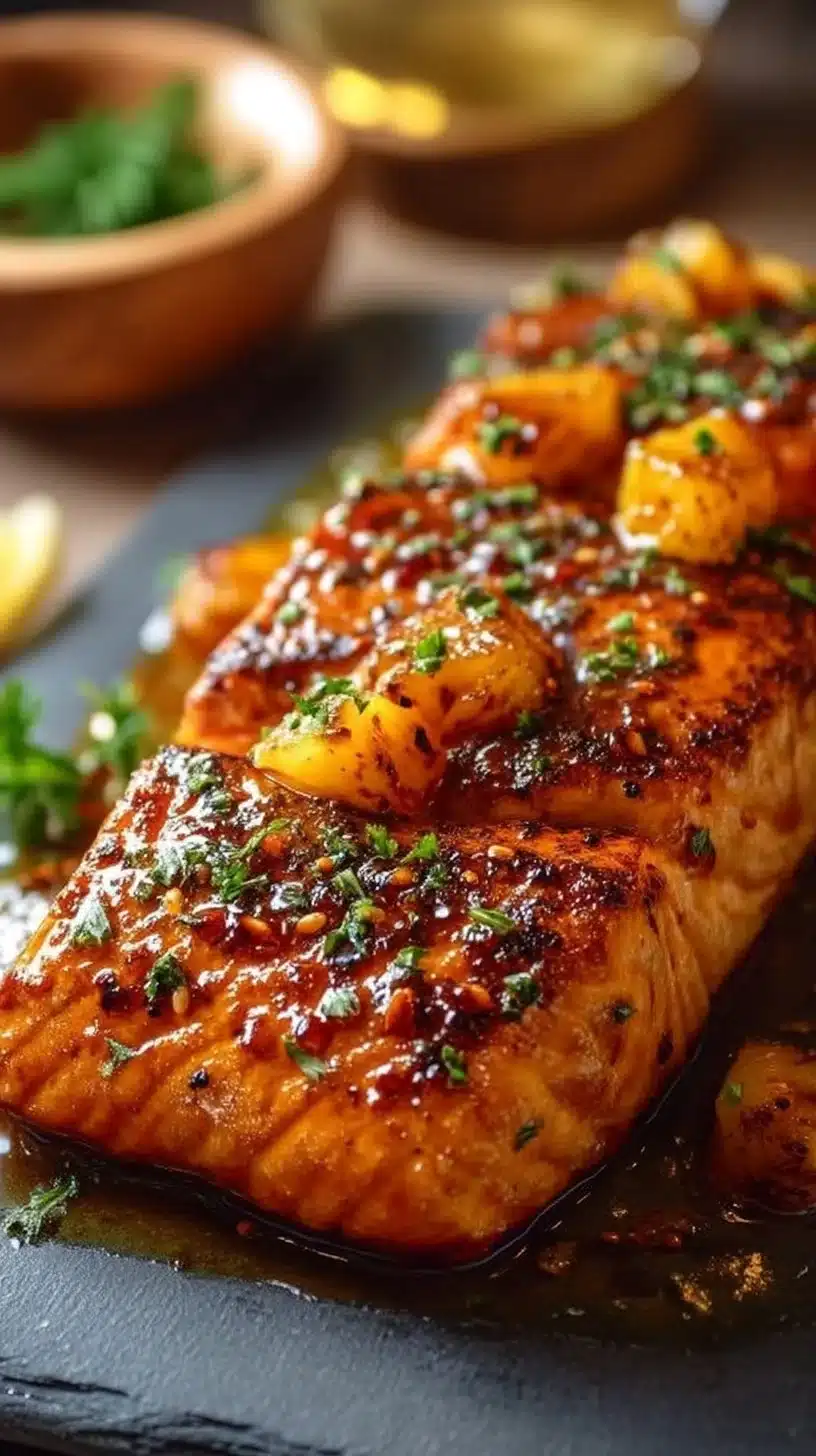
Preheat your oven to 400 degrees Fahrenheit (200 degrees Celsius). Lightly grease a baking dish large enough to hold the salmon fillets without overcrowding. In a small bowl, whisk together the brown sugar, soy sauce, rice vinegar, minced garlic, and grated ginger (if using) to create your glaze. Pat the salmon fillets thoroughly dry with paper towels. This is important for even cooking and seasoning. Rub each fillet all over with olive oil, then season generously with salt and black pepper. Place the seasoned salmon fillets skin-side down (if skin is on) or flat into your prepared baking dish. Spoon about two-thirds of the pineapple glaze mixture evenly over each salmon fillet. Scatter the diced pineapple around the salmon in the dish. Bake for 12 to 15 minutes, or until the salmon is just cooked through and flakes easily with a fork. The key to avoiding dry salmon is to remove it from the oven as soon as it reaches this point. It should be opaque throughout but still look wonderfully moist. If you desire a more caramelized glaze, you can briefly broil the salmon for 1 to 2 minutes after baking, keeping a very close eye on it to prevent burning. Remove the dish from the oven. Let the salmon rest in the baking dish for 5 minutes before serving. This allows the juices to redistribute, ensuring a tender and juicy result. Garnish with fresh chopped parsley and serve warm with the delicious pan juices and pineapple. Notes to avoid errors: make sure pineapple is well drained to avoid steamed fish. Check doneness by flake test at the thickest part; if it flakes and is opaque, stop cooking. If glaze darkens too quickly, move the dish lower in the oven or skip broil.
How to use this recipe
Serve this dish as a main with steamed rice, a simple salad, or roasted vegetables. It works well for weeknight dinners and also scales for a small dinner party. Cook full portions for same-day serving or bake multiple trays and refrigerate for planned leftovers. Leftover fillets hold up in grain bowls or sandwiches and reheat gently to preserve texture. For batch prep, keep sauce and pineapple separate and warm briefly when serving to refresh the glaze. See a related glazed salmon for different sweet profiles at candied salmon.
How to store this recipe
Cool cooked salmon to room temperature within two hours, then transfer to an airtight container. Refrigerate for up to 3 days. To freeze, wrap fillets tightly and store up to 2 months; thaw overnight in the fridge before reheating. Reheat gently in a 300°F oven until warmed through or in a covered skillet over low heat to avoid drying. Store glaze separately if you plan to freeze; that reduces ice crystal damage and preserves texture when thawed.
Tips for consistent results
Keep salmon thickness consistent so bake time is predictable. Dry the fillets well and rub with oil so salt and glaze adhere. Drain pineapple thoroughly to prevent excess liquid that can lower oven temp and extend cook time. If salmon is underdone, return to the oven in 2–3 minute bursts; check often. If glaze is browning too fast, reduce broil time or tent with foil. Using a thermometer, aim for 125–130°F internal for medium-rare to medium finish. For other glaze ideas that use similar timing, try a version like this baked boursin salmon. The Pineapple Glazed Salmon name signals the sweet-tang balance to expect.
Variations that still work
Keep the glaze balance and timing if you change components. Swap brown sugar for equal honey to retain sweetness and stickiness. Use lime juice instead of rice vinegar for brighter acid, but use slightly less. Substitute pineapple chunks with drained crushed pineapple for more even coverage — watch moisture. Replace soy with tamari for gluten-free results without changing amounts. Avoid major swaps that add too much water or eliminate umami; those change cook time and finish. Small, measured swaps keep the recipe reliable.
FAQs
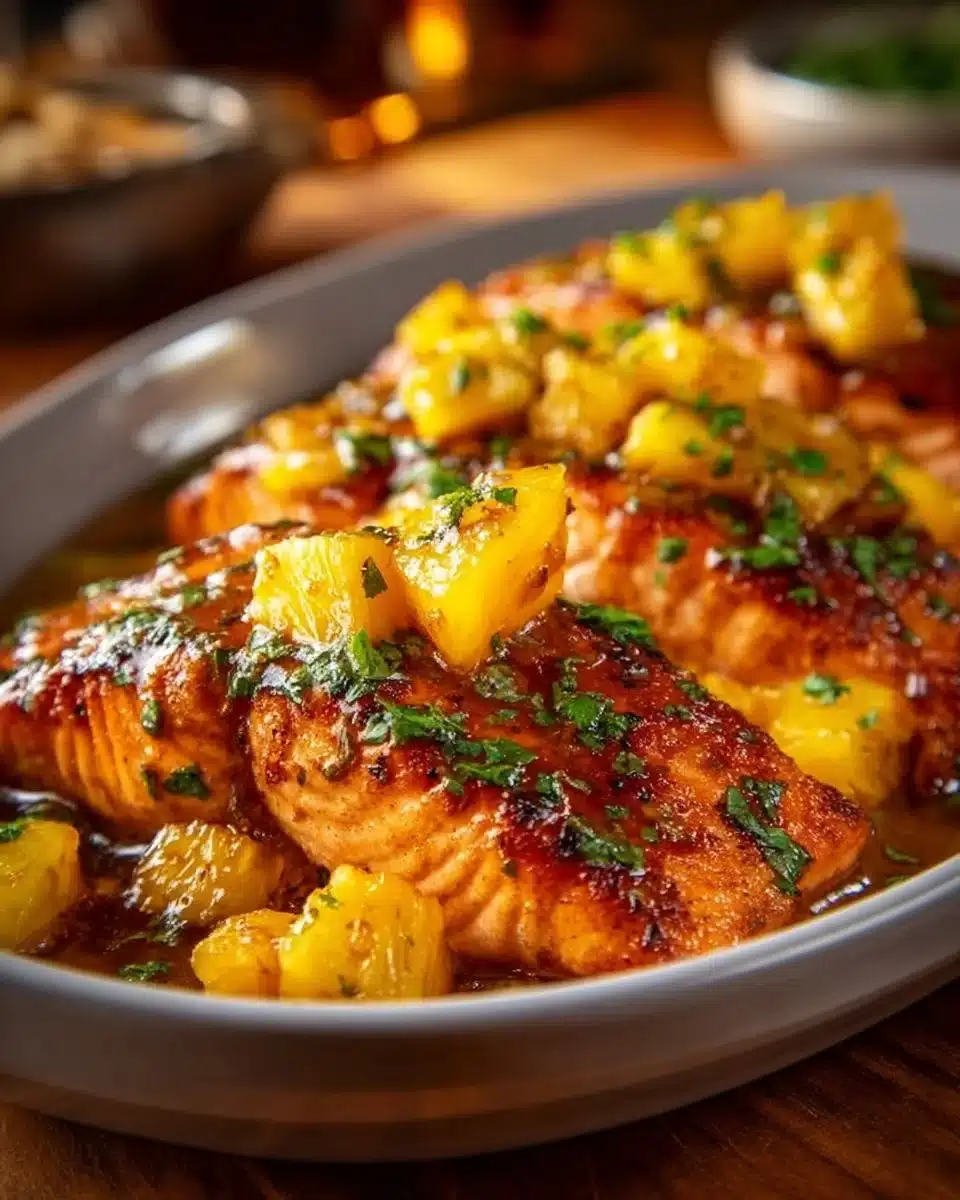
Q: How do I tell when salmon is done? A: Flake the thickest part with a fork; it should flake and look opaque. A thermometer at 125–130°F gives a moist result. Q: Can I use frozen pineapple? A: Yes if fully thawed and well drained. Excess water will affect glaze and baking time. Q: Will this burn under the broiler? A: It can. Watch carefully for 1–2 minutes only. If edges darken quickly, stop broiling.
Conclusion
This method delivers a quick, repeatable main that balances sweet, salty, and acidic notes while keeping salmon moist. The step order—dry, oil, glaze, bake, brief broil, rest—limits variables so you get consistent results across cooks and ovens. Use it for weeknight meals, batch cooking, or planned leftovers knowing texture and flavor hold up. For another tested take on the same flavor profile, see Pineapple Glazed Salmon – Well Plated.
Print
Pineapple Glazed Salmon
- Total Time: 25 minutes
- Yield: 4 servings 1x
- Diet: Gluten-Free
Description
A quick and flavorful dish featuring salmon fillets glazed with a sweet-tangy pineapple sauce, perfect for busy weeknight dinners.
Ingredients
- 4 salmon fillets, approximately 6 ounces each
- 1 tablespoon olive oil
- 1/2 teaspoon salt
- 1/4 teaspoon black pepper
- 1 cup fresh or canned pineapple, diced and well drained
- 1/4 cup packed light brown sugar
- 2 tablespoons soy sauce
- 1 tablespoon rice vinegar
- 1 teaspoon minced garlic
- 1/2 teaspoon grated fresh ginger (optional)
- 1 tablespoon fresh parsley, chopped (for garnish)
Instructions
- Preheat your oven to 400 degrees Fahrenheit (200 degrees Celsius).
- Grease a baking dish large enough to hold the salmon fillets without overcrowding.
- Whisk together the brown sugar, soy sauce, rice vinegar, minced garlic, and grated ginger (if using) in a small bowl to create your glaze.
- Pat the salmon fillets thoroughly dry with paper towels.
- Rub each fillet with olive oil, then season generously with salt and black pepper.
- Place the seasoned salmon fillets skin-side down in your prepared baking dish.
- Spoon about two-thirds of the glaze mixture evenly over each salmon fillet.
- Scatter the diced pineapple around the salmon in the dish.
- Bake for 12 to 15 minutes, or until the salmon is just cooked through and flakes easily with a fork.
- Broil the salmon for 1 to 2 minutes if you desire a more caramelized glaze, monitoring closely to prevent burning.
- Let the salmon rest in the baking dish for 5 minutes before serving.
- Garnish with fresh chopped parsley and serve warm.
Notes
Ensure pineapple is well drained to avoid steamed fish. Check doneness by flake test at the thickest part; if it flakes and is opaque, stop cooking.
- Prep Time: 10 minutes
- Cook Time: 15 minutes
- Category: Main Course
- Method: Baking
- Cuisine: American
Nutrition
- Serving Size: 1 fillet
- Calories: 350
- Sugar: 18g
- Sodium: 600mg
- Fat: 12g
- Saturated Fat: 2g
- Unsaturated Fat: 10g
- Trans Fat: 0g
- Carbohydrates: 25g
- Fiber: 1g
- Protein: 30g
- Cholesterol: 60mg