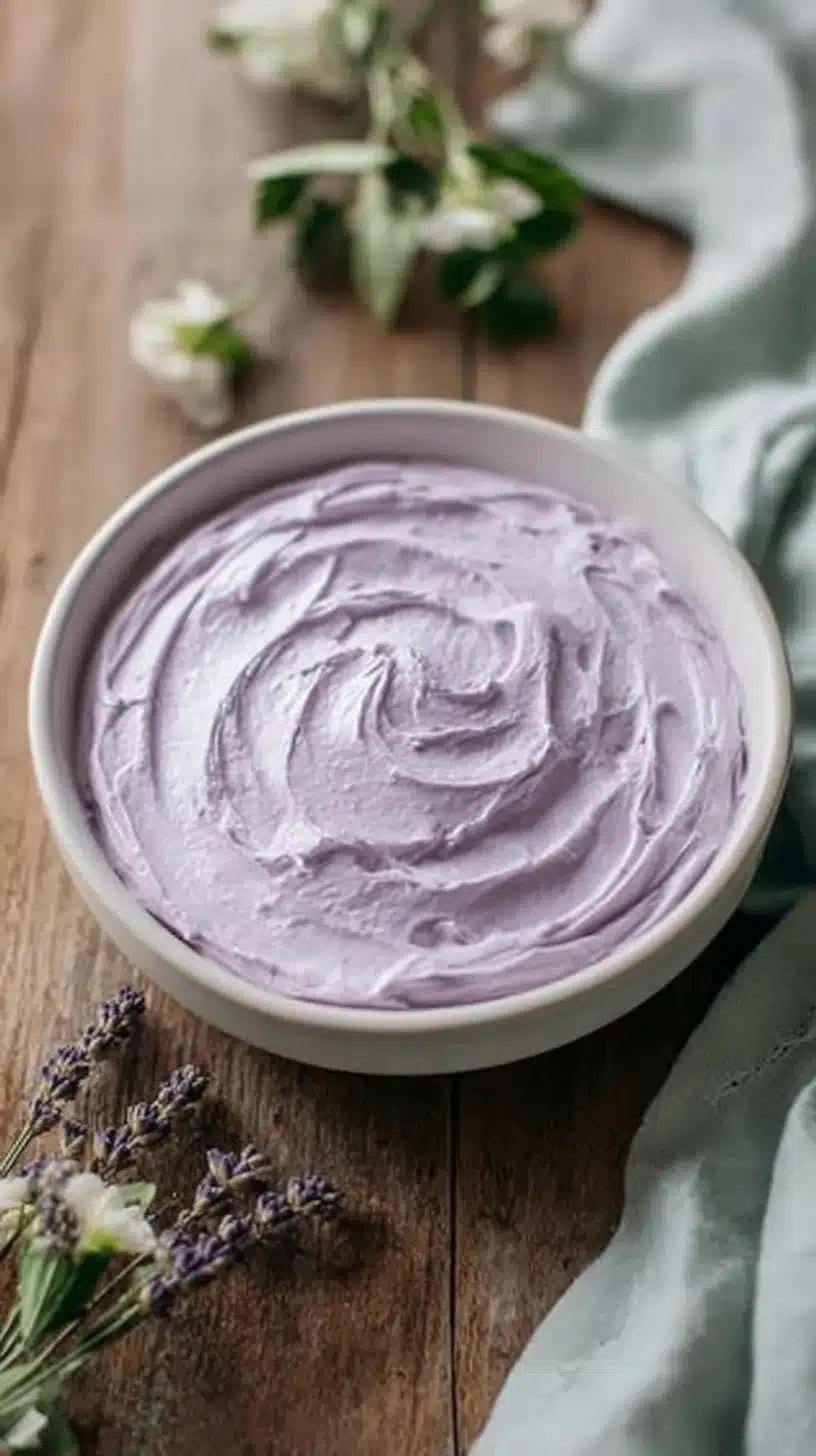
There’s a particular kind of comfort that comes from the first whiff of Lavender Buttercream Frosting — floral, sweet, and a little bit romantic. When I make Lavender Buttercream Frosting, the kitchen instantly feels like a cozy bakery at dawn: the butter softens, the lavender blooms, and vanilla wraps everything in a warm hug. It’s the kind of frosting you want to spread on cupcakes for a bridal shower, dollop on a slice of pound cake for a quiet afternoon tea, or pipe in soft swirls for a spring celebration.
What makes Lavender Buttercream Frosting special is how it balances a delicate floral note with classic sweet buttercream warmth. The scent is soothing and the flavor is gentle, not perfumy, which is why I reach for this frosting when I want something a little unexpected but still familiar. If you love baking with little surprises, try pairing this frosting with a citrus cake or a simple vanilla sponge — the contrast sings. For another take on festive frostings, I sometimes peek at recipes like this Moist Christmas Spice Cake with Eggnog Buttercream for inspiration.
Why you’ll love this recipe
- The lavender adds a floral lift without overpowering the sweet buttercream.
- It’s simple to make with pantry-friendly steps and easy adjustments.
- The pastel pink-violet swirl looks stunning on cupcakes, cakes, or cookies.
- It’s nostalgic and elegant — comforting but also a little fancy.
How to make Lavender Buttercream Frosting
First, prepare your lavender so the flavor infuses evenly. Crushing the dried culinary lavender lightly releases its aroma, and when you fold it into butter, that first floral note emerges — this is when it starts to smell amazing. Next, cream the butter until it’s soft and airy, then add lavender and vanilla so those flavors bloom into the fat. Once you add powdered sugar and milk, you’ll notice the texture shift from thick to silky; don’t worry if it looks dense at first — it will smooth out as you beat it at higher speed.
After you taste and make small adjustments, color the frosting with tiny amounts of gel food coloring. Mix just until the colors are even and soft; a little goes a long way. Finally, use the frosting right away to ice warm cupcakes or chill it briefly in the fridge if you want to pipe later. For a different project, you might enjoy pairing the floral notes with spice-forward bakes like this Moist Christmas Spice Cake with Eggnog Buttercream — the contrast can be surprising and delightful.
Ingredients
- 1 cup unsalted butter (room temperature)
- 1-2 teaspoons ground dried lavender (culinary grade)
- 1 teaspoon pure vanilla extract
- 3-4 cups powdered sugar
- 2-3 Tablespoons milk (room temperature)
- 1 part pink and violet gel food coloring
Butter is the backbone of this frosting; using unsalted butter at room temperature gives you smooth volume and a neutral base so the lavender and vanilla can shine. Culinary-grade dried lavender ensures you get a food-safe floral flavor without any bitter, woody notes. Powdered sugar sets the sweetness and structure — the more you add, the stiffer the frosting becomes — while a few tablespoons of milk loosen it to a spreadable, pipeable texture. Gel food coloring gives vivid hues without thinning the frosting; a toothpick’s worth is more than enough to reach a gentle pastel.
Substitutes: If you need a dairy-free version, use a high-quality vegan butter or shortening and a splash of plant milk; the texture will change slightly but still be lovely. If you can’t find culinary lavender, substitute with 1/2 teaspoon lavender extract (start small and taste), keeping in mind it’s more concentrated.
Directions
Prepare the dried culinary lavender. To grind the dried lavender buds, put them in a zip-top bag and crush them with a rolling pin. This releases oils and makes measuring easier; you’ll smell that pleasant floral scent right away. If you want an even finer texture, pulse the buds briefly in a spice grinder, but don’t overdo it or you’ll risk bitterness.
Cream the butter. Add the lavender and vanilla. In the bowl of a stand mixer fitted with the paddle attachment, beat the butter on medium speed. After it’s a bit creamy (after about one minute), add 1 teaspoon of the ground dried lavender and the vanilla. Mix until creamy, about one more minute. This is when the lavender perfumes the butter and the mixture turns glossy; give it a quick taste to check the balance — it should smell floral but not soapy.
Add the powdered sugar and milk. Add 3 1/2 cups (400g) of powdered sugar and 2 Tablespoons of milk. Beat on low speed for 30 seconds, then increase to medium-high speed for two minutes. Scrape down the sides and bottom of the bowl, then beat again until fully smooth. At this stage the frosting will look pale and velvety; if it seems too thick, a splash more milk will loosen it evenly.
Adjust as needed. If the frosting is too thin, add up to 1/2 cup more powdered sugar, 1/4 cup at a time. If the frosting is too thick, add more milk, 1/2 Tablespoon at a time. If the lavender flavor is lacking, add one additional teaspoon of dried lavender. Add a pinch of salt if it tastes too sweet (about 1/8 teaspoon). In all scenarios, beat together, taste, and adjust as desired. A note from experience: small changes make a big difference, so tweak slowly and taste between adjustments.
Color the frosting. Once your desired flavor and consistency is achieved, add in 1 part pink and 1 part violet gel food coloring using a toothpick. Start by dipping the end of the toothpick into the food coloring jar and apply a small amount directly in the buttercream. Mix until evenly colored. Always use a new, clean toothpick if adding more color! The pastel lavender-pink finish is subtle and elegant; if you want a bolder hue, add more color a tiny bit at a time.
Use immediately or store for later. If you’re not going to use the frosting right away, it’s best to store it in the refrigerator in an airtight container for up to 1 week. When you’re ready to use it, bring it back to room temperature and re-whip briefly to return it to pipeable consistency. If you plan to decorate ahead, chill and then scoop into a piping bag; chilled frosting holds shape better for intricate designs.
How to serve Lavender Buttercream Frosting
Lavender Buttercream Frosting crowns cupcakes beautifully — pipe a rosette and sprinkle with edible pearls for a bridal shower. It also pairs exceptionally well with lemon or almond cakes, balancing bright citrus or nutty flavors with floral sweetness. For a simple afternoon treat, spread it thickly on warm, freshly baked sugar cookies and watch the buttercream melt into the edges.
The soft pink-violet color adds visual charm: pale swirls look elegant on white cakes, while a contrast on darker chocolate cake feels refined. Serve at room temperature so the frosting is pillowy and aromatic; chilled frosting tightens and flattens the floral perfume, so bring it out about 30 minutes before serving for the best aroma.
How to store Lavender Buttercream Frosting
Refrigerate any leftover Lavender Buttercream Frosting in an airtight container for up to 1 week. Press plastic wrap directly against the surface before sealing to prevent a crust from forming. To freeze, dollop the buttercream into a freezer-safe container or zip bag and freeze for up to 3 months; thaw overnight in the refrigerator, then bring to room temperature and re-whip before using.
If the frosting feels too soft after warming, pop it into the fridge for 15–20 minutes and then beat again; a short chill firms up the structure without dulling flavor. For quick use, a brief 10–15 second zap in the microwave on low power can soften a small amount, but be careful not to melt it completely.
Tips for perfect Lavender Buttercream Frosting
- Use culinary-grade lavender: Non-culinary lavender can taste bitter or musty, so choose buds sold for cooking. I learned this the easy way — a low-quality lavender will ruin the delicate balance.
- Start with less lavender: The floral note can become overpowering quickly. Add more only after tasting.
- Keep butter at the right temperature: Too warm and the frosting will be greasy; too cold and it won’t whip properly. Room temperature is key.
- Add color sparingly: Gel coloring gives you control without changing texture. Mix thoroughly before deciding to add more.
- Re-whip after chilling: If you store the frosting, bring it back to room temp and whip briefly to restore fluffiness. For piping, chill slightly to hold shapes better.
If you want some inspiration on pairing creative frostings with seasonal cakes, check out this Moist Christmas Spice Cake with Eggnog Buttercream — it’s a fun example of pairing frostings with bold flavors.
Variations
Lavender Honey Buttercream: Swap half the powdered sugar for sifted confectioners’ sugar with 2 tablespoons of honey for a deeper floral-sweet complexity. Use less vanilla so the honey’s character can come forward.
Lemon-Lavender Buttercream: Add 1 teaspoon lemon zest and replace one tablespoon of milk with fresh lemon juice for a bright, tangy lift. This version is brilliant on lemon cakes or blueberry cupcakes.
Dairy-free Lavender Buttercream: Use a firm vegan butter and plant-based milk, then add a tablespoon of vegetable shortening for structure. Taste as you go — vegan butters vary widely in flavor.
Lavender-Blueberry Swirl: Fold in 1/4 cup blueberry jam for a streaked effect and fruity note. Marbling the frosting gives both flavor and a pretty pastel swirl.
FAQs
Q: How strong will the lavender flavor be?
A: The lavender starts subtle with 1 teaspoon in this recipe, giving a gentle floral hint. If you prefer a more pronounced flavor, add another teaspoon and taste. Remember that dried lavender potency varies, so adjust slowly.
Q: Can I use lavender extract instead of dried lavender?
A: Yes, you can substitute lavender extract, but it’s more concentrated. Start with 1/4 teaspoon and increase in tiny increments; extracts can become soapy if overused. Always taste as you go to avoid an overpowering flavor.
Q: Will the food coloring affect the taste?
A: Gel food coloring adds color without changing flavor or texture when used sparingly. Using too much could slightly alter consistency, but a toothpick or two will give a lovely pastel without impacting taste. If you want natural tinting, try a tiny amount of beet juice for pink, though it may introduce subtle flavor notes.
Q: How do I keep the frosting smooth for piping?
A: Keep your butter at room temperature and beat until fluffy; if the frosting feels loose, chill for 10–15 minutes to firm it up, then re-whip. Use a piping bag with a proper tip and steady pressure for clean swirls. If the buttercream gets greasy, add a bit more powdered sugar and re-whip.
Q: Can I make this ahead for a party?
A: Absolutely — make the Lavender Buttercream Frosting up to a week ahead and store it in the fridge, or freeze it for up to three months. Re-whip after chilling to restore its texture, and bring it to room temperature before serving for the best aroma.
Conclusion
I hope this Lavender Buttercream Frosting becomes one of those recipes you reach for when you want something gentle, pretty, and just a little bit fancy. If you love floral frostings, save this Lavender Buttercream Frosting for your next celebration or share it with someone who’d enjoy a soft, fragrant treat. For more ideas and variations on lavender frostings, you might enjoy this detailed recipe from Lavender Buttercream Frosting – Sugar & Sparrow and another lovely take on naturally flavored options at Lavender Buttercream Frosting, naturally flavored and colored.
Print
Lavender Buttercream Frosting
- Total Time: 15 minutes
- Yield: 2 cups 1x
- Diet: Vegetarian
Description
A delicate and floral infused buttercream frosting, perfect for cupcakes, cakes, and cookies.
Ingredients
- 1 cup unsalted butter (room temperature)
- 1–2 teaspoons ground dried lavender (culinary grade)
- 1 teaspoon pure vanilla extract
- 3–4 cups powdered sugar
- 2–3 tablespoons milk (room temperature)
- 1 part pink and violet gel food coloring
Instructions
- Prepare the dried culinary lavender by crushing it lightly to release its aroma.
- Cream the butter in a stand mixer until it’s soft and airy.
- Add lavender and vanilla to the butter and mix until creamy.
- Add powdered sugar and milk, then beat until the frosting is smooth and silky.
- Adjust the frosting’s consistency by adding more powdered sugar or milk as needed.
- Color the frosting with gel food coloring until desired hue is achieved.
- Use immediately or store in the refrigerator.
Notes
Ensure to use culinary-grade lavender for flavor and avoid any bitterness. Adjust sweetness and thickness gradually.
- Prep Time: 15 minutes
- Cook Time: 0 minutes
- Category: Dessert
- Method: Frosting
- Cuisine: American
Nutrition
- Serving Size: 1 tablespoon
- Calories: 120
- Sugar: 20g
- Sodium: 50mg
- Fat: 9g
- Saturated Fat: 5g
- Unsaturated Fat: 3g
- Trans Fat: 0g
- Carbohydrates: 15g
- Fiber: 0g
- Protein: 0g
- Cholesterol: 30mg